
What Must Be on a Packaged Food Label in the U.S.?
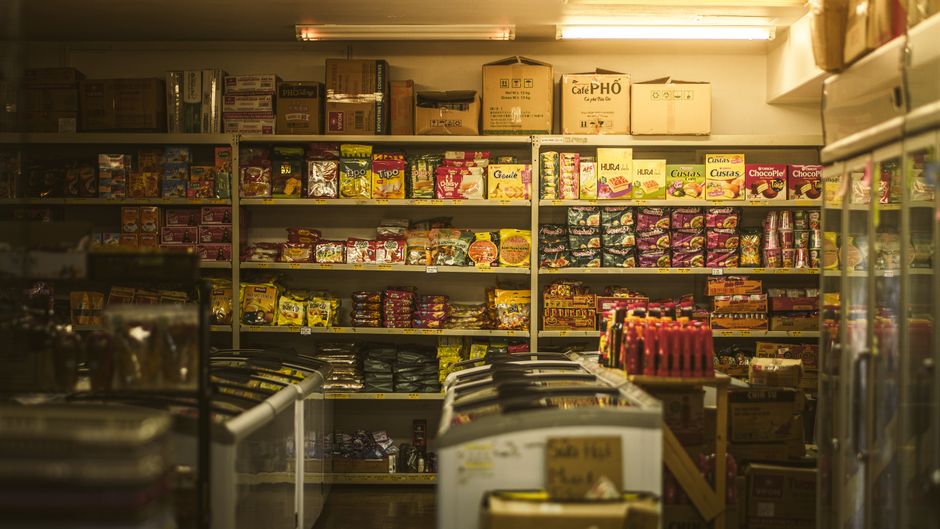
A U.S. packaged-food label generally needs the food's identity, net quantity, ingredient list, responsible business name and address, required allergen disclosure, and Nutrition Facts information unless a narrow exemption applies. Put the product name and net quantity on the principal display panel; group the remaining required information on the information panel when it is not on the front.
Start with placement. A good-looking label that puts mandatory copy in the wrong place creates avoidable rework at the point when packaging changes cost the most. Treat the label as two jobs: help a shopper identify the product, then give them the required information in one clear, readable place.
What information is legally required on a packaged food label?
A packaged food label generally requires an identity statement, net quantity statement, ingredient list, manufacturer, packer, or distributor name and address, required allergen labeling, and nutrition labeling unless an exemption applies. The FDA Food Labeling Guide separates the work into the principal display panel and the information panel.
The principal display panel, or PDP, is the package area most likely to be seen when the customer shops. FDA says the food name and net quantity must appear there and on each alternate PDP. The net quantity is not decorative footer copy: it must be a distinct item in the bottom 30 percent of the PDP and generally run parallel to the package base.
| Label area | What to place there | Practical check |
|---|---|---|
| Principal display panel | Statement of identity and net quantity | Confirm both appear on every alternate principal display panel. |
| Information panel | Business name and address, ingredients, Nutrition Facts when required, and required allergen labeling | Keep these required statements together when they are not on the PDP. |
| Information-panel copy | Required information | Use conspicuous, contrasting type; FDA generally calls for at least 1/16 inch based on the lowercase “o.” |
For the business line, include the manufacturer, packer, or distributor name and address, including city, state, and ZIP code. If the named business did not manufacture the food, use a qualifying phrase such as “distributed by” or “manufactured for.” That small phrase makes the label describe the business role accurately.
Run a front-versus-side check before approving artwork. Ask: “Can a shopper see the food name and amount on the front?” Then ask: “Can an inspector find the business line, ingredients, nutrition information, and allergen statement together without hunting through marketing copy?” The first question protects placement. The second protects cognitive load.
Do I need a Nutrition Facts label for my small food business?
Most packaged foods need nutrition labeling, but a small business can qualify for a limited exemption if it meets every applicable condition. According to FDA's Small Business Nutrition Labeling Exemption guidance, the low-volume route requires fewer than an average of 100 full-time-equivalent employees and fewer than 100,000 units of that product sold in the United States during a 12-month period.
Those conditions work as a pair. “Fewer than 100,000 units” is not the whole test. A firm claiming the low-volume exemption must also file a notice with FDA annually. If FDA does not receive a completed annual notice, the exemption no longer applies.
| Situation | Nutrition-label result | What to do |
|---|---|---|
| Fewer than 100 average full-time-equivalent employees and fewer than 100,000 units in 12 months | May qualify for the low-volume exemption | File a completed notice with FDA every year. |
| Non-importer with fewer than 10 full-time-equivalent employees and fewer than 10,000 annual units | May qualify without filing a notice | Confirm the product and sales conditions remain below the stated thresholds. |
| Nutrition, health, or other nutrition information appears in labeling or advertising | Small-business exemption is unavailable for that product | Use Nutrition Facts labeling rather than relying on the exemption. |
| Retailer with annual gross sales no more than $500,000, or annual consumer food and dietary-supplement sales no more than $50,000 | May separately qualify for a retail-sales exemption | No FDA filing is required for these retail-sales exemptions. |
The claim trap is where launch plans break. FDA's Small Business Nutrition Labeling Exemption Guide is direct: a nutrient-content claim, health claim, or other nutrition information on the label, labeling, or advertising makes the exemption unavailable for that product. Weak approach: “We are exempt, so the marketing can say whatever it wants.” Strong approach: “Before publishing any nutrition-related language, check whether it ends the exemption.”
An exemption removes only the Nutrition Facts requirement. It does not remove the identity statement, net quantity, ingredients, required allergen information, or responsible business name and address. Keep those workstreams separate.
How do I list ingredients in the correct order on a food label?
Use an ingredient list as required label information and verify the exact ordering and naming details against the applicable FDA requirements before printing. The supplied FDA labeling materials confirm that the ingredient list belongs with information-panel labeling, but this research dossier does not set out the ingredient-order rule or its exceptions. Do not fill that gap with a guess from a packaging template.
What the materials do make clear is placement: when the ingredient list is not on the PDP, it should be grouped with the other required information-panel statements, without intervening material. Build the ingredient statement from the final formula, then run it against the final supplier documentation and final package artwork. Formula changes made after the label proof are a common operational failure because the ingredient line and allergen statement may both need revision.
Use this production handoff: “This is the final formula. These are the ingredients that must appear on the label. These are the allergens that must be declared.” It is clearer than handing a designer a draft recipe and assuming the details will survive packaging revisions. The same check-before-commit discipline helps with other product decisions, including this site's Tory Burch Clearance Guide: Buy at the Right Price Without Losing Return Options.
Allergen labeling needs a separate final review. FDA states that the major allergens are milk, eggs, fish, crustacean shellfish, tree nuts, peanuts, wheat, soybeans, and sesame. A FDA FASTER Act page confirms that sesame has required declaration on packaged foods and dietary supplements since January 1, 2023.
You can identify sesame by its common or usual name in the ingredient list, in a parenthetical declaration after an ingredient, or in a Contains statement immediately after or next to the ingredient list. Do not hide a sesame-derived ingredient behind a generic term where that would obscure the sesame source. FDA's allergen-labeling guidance also says that coconut and several other listed nuts are no longer classified as major allergens for a Contains statement, though they still must be declared by common or usual name in the ingredient list when added as ingredients unless an exception applies.
Frequently Asked Questions
Where does the net weight go on food packaging?
The net quantity statement belongs as a distinct item in the bottom 30 percent of the principal display panel, generally parallel to the package base. FDA says it must be expressed as weight, measure, or numerical count.
Do I need to declare sesame and other allergens on my label?
Yes, when a major allergen is present in an FDA-regulated packaged food, its food source must be identified. Sesame became the ninth major allergen requiring declaration on January 1, 2023; it may be identified in the ingredient list, in a parenthetical declaration, or in a Contains statement immediately after or next to that list.
Can I use a nutrition-label exemption if I make fewer than 100,000 units?
Not on unit volume alone. The low-volume exemption requires fewer than 100 average full-time-equivalent employees as well as fewer than 100,000 units of that product sold in the United States during a 12-month period, and the business must file an annual notice with FDA. Nutrition claims, health claims, or other nutrition information on the label, labeling, or advertising make this exemption unavailable for that product.
Before sending a label to print, do one final three-part drill: point to the PDP identity and net quantity, read the information panel from top to bottom, and search every label and ad line for nutrition-related claims. If any answer changes after that pass, revise the label before the print run.
Sources
- U.S. Food and Drug Administration: Food Labeling Guide
- U.S. Food and Drug Administration: Small Business Nutrition Labeling Exemption Guide
- U.S. Food and Drug Administration: Small Business Nutrition Labeling Exemption
- U.S. Food and Drug Administration: The FASTER Act: Sesame Is the Ninth Major Food Allergen
- U.S. Food and Drug Administration: Food Allergen Labeling Guidance for Industry FAQ