
How Should I Choose, Size, and Serve Finger Foods for a Party?
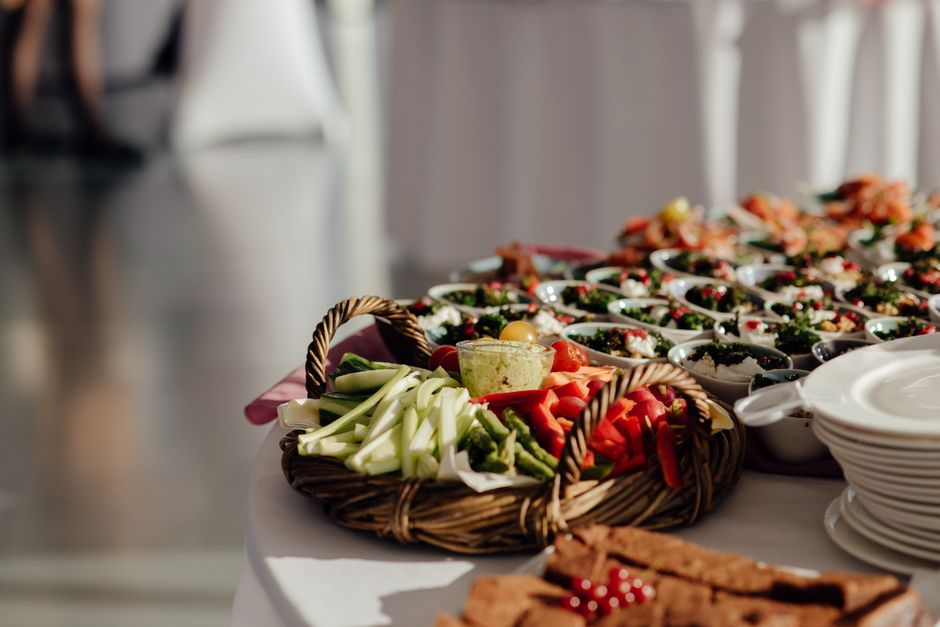
Plan finger food from the event’s purpose and duration: allow 4-6 pieces per guest per hour before a meal, or 5-7 per guest per hour plus 1-2 displays when appetizers are the meal. Choose one- or two-bite items across cold, hot, vegetarian, substantial, and sweet options; label dietary choices; and keep hot food at 140°F or higher and cold food at 40°F or lower.
The puzzle is simple: a party menu fails less often because it lacks imagination than because it uses the wrong unit of measurement. Guest count alone is incomplete. Time, meal timing, alcohol, menu breadth, and whether people will be standing all change what the same number of guests will eat.
How many finger foods should I serve per person at a party?
Serve according to the party’s role in the day, not according to a single universal piece count. For a pre-meal cocktail hour, the University of California, Irvine Special Events guide recommends 4-6 hors d'oeuvres per person per hour. For a standalone cocktail reception, its rule is 5-7 pieces per person per hour, plus 1-2 stationary displays.
Washington State University Catering uses a more front-loaded planning rule: 6-10 pieces per person for the first hour, then 4-6 pieces for every additional hour. These are not competing truths so much as different planning lenses. The first hour carries the heaviest demand, especially when guests arrive together; a reception that replaces a meal requires a higher baseline throughout.
| Party format | Planning guide from the sources | What the number is designed to cover |
|---|---|---|
| Pre-meal cocktail hour | 4-6 pieces per person per hour | Appetites before a later meal |
| Standalone cocktail reception | 5-7 pieces per person per hour, plus 1-2 displays | Appetizers serving as the central food |
| First reception hour | 6-10 pieces per person | Initial arrival and peak buffet demand |
| Each additional hour | 4-6 pieces per person | Continuing service after the first hour |
Use the table as a calculation framework, then adjust it. The University of Houston-Downtown Catering guide advises increasing quantities when hors d'oeuvres are the main food, the event falls during a meal period, alcohol is served, guests will mingle for a long time, or the audience is primarily students. It also advises adding 5-10% where attendance is uncertain, service spans several hours, the event is at lunch or dinner, or the menu is limited.
Variety needs arithmetic too. UHD’s example for 50 guests choosing two appetizer selections calls for about 100 pieces of each selection: roughly two pieces per guest of each item. That is a useful way to prevent a common error, which is calculating an adequate total and then placing nearly all of it in one selection. A menu can have enough food in aggregate while offering too little usable choice.
Should I serve a full meal or only appetizers at an evening party?
Serve enough food to function as a meal when the event takes place during a meal period, runs for several hours, includes alcohol, or explicitly invites guests to rely on appetizers as dinner. In those conditions, appetizer-only service is not a lighter version of a meal; it is the meal, and quantity must rise accordingly.
The deciding question is not whether the menu contains formal entrées. It is whether guests reasonably expect food to carry them through the gathering. A short reception before dinner can use the UCI pre-meal range. By contrast, a standalone evening cocktail reception should use its 5-7-pieces-per-hour range and add stationary displays. The distinction matters because an evening invitation can create a meal expectation even when the word “dinner” never appears.
Build the menu as a system of roles: cold items for immediate service, hot items for contrast, vegetarian choices that are not merely an afterthought, more substantial choices, and a sweet finish. Washington State University Catering’s menu illustrates the useful range: cold canapes and tea sandwiches alongside stuffed mushrooms, arancini, sliders, meatballs, and wings. Its listed options also include gluten-free arancini, plant-based leek-and-saffron arancini, a falafel slider, cauliflower wings, and vegetarian eggrolls.
For a casual gathering, combine cold canapes or tea sandwiches with stuffed mushrooms, vegetarian eggrolls, and a sweet option. For a cocktail party serving as dinner, widen the substantial side with sliders, meatballs, wings, arancini, and stationary displays, while retaining cold choices so service does not depend entirely on hot holding. For a children’s party, use the same standing-guest logic in smaller portions: one- or two-bite choices, plainly identified selections, and service replenished in small trays rather than one large exposed spread.
If your business is purchasing packaged components for resale or service, packaging and dietary claims deserve the same scrutiny as portion counts. Tree Beacon’s guide to what must be on a packaged food label in the U.S. provides the relevant labeling context.
What mix of hot and cold finger foods works best?
The best mix uses cold food for continuity and hot food for contrast, while ensuring every item is manageable in one or two bites. UCI specifically advises easy-to-eat hors d'oeuvres and utensils when appropriate; that is the central design constraint for a standing, social event. Food that requires cutting, balancing, or repeated trips to a table converts a conversation into a logistics exercise.
A practical sequence is to place cold canapes and tea sandwiches first, then replenish hot stuffed mushrooms, arancini, sliders, meatballs, or wings in smaller batches. This is not merely a visual choice. Cold items remain available while hot food is refreshed, and the service line does not depend on a single temperature-sensitive category.
Dietary planning belongs inside the menu architecture. FoodSafety.gov advises obtaining guest allergy information in advance; the same list can identify vegan, vegetarian, and gluten-free preferences. Always include vegetarian and vegan selections, as UCI recommends, and identify each selection clearly so guests do not need to interrogate the host or service staff.
Gluten-free requires precision rather than a casual label. FoodSafety.gov explains that gluten occurs naturally in wheat, rye, barley, and triticale, and that the FDA standard permits foods labeled gluten-free, no gluten, free of gluten, or without gluten to contain less than 20 parts per million of gluten. Use separate utensils, plates, and cutting boards where needed to reduce cross-contamination; FoodSafety.gov gives the same separation instruction for raw meat and poultry versus ready-to-eat foods.
Temperature control is the final constraint. The USDA Food Safety and Inspection Service says hot food should be held at 140°F or warmer and cold food at 40°F or colder. Use chafing dishes, slow cookers, or warming trays for hot selections; nest cold dishes in ice or replace small trays frequently. Perishable food cannot remain at room temperature longer than 2 hours, or longer than 1 hour when the temperature exceeds 90°F.
The resulting principle is blunt: serve less at once, replenish more often, and verify temperatures with a food thermometer. A generous buffet that sits outside safe holding temperatures is not generous in any useful sense.
Frequently Asked Questions
How do I choose party foods for vegetarian and gluten-free guests?
Ask for allergy and dietary information before the event, then use that list to identify vegetarian, vegan, and gluten-free needs. Include vegetarian and vegan selections as part of the core menu rather than as an afterthought. For packaged gluten-free foods, the FDA standard permits a gluten-free claim when the food contains less than 20 parts per million of gluten; use separate utensils and serving tools to reduce cross-contact.
What finger foods are easiest to eat while guests are standing up?
Choose foods that can be eaten in one or two bites, because guests need one hand free to hold a drink, greet others, or manage a plate. Canapes, tea sandwiches, stuffed mushrooms, arancini, sliders, meatballs, wings, and similar individually portioned items fit this format. Provide utensils whenever an item requires them rather than forcing guests to improvise at the buffet.
Sources
- University of California, Irvine Special Events: Catering Guidelines
- Washington State University Catering: Hors d'Oeuvres
- University of Houston-Downtown Catering: Ordering Guide for Clients
- USDA Food Safety and Inspection Service: Steps to Keep Food Safe
- FoodSafety.gov: Food Safety Tips for Catered and DIY Wedding Food
- FoodSafety.gov: Gluten-Free Labeling