
Should a Hotel Outsource Laundry or Run It In-House?
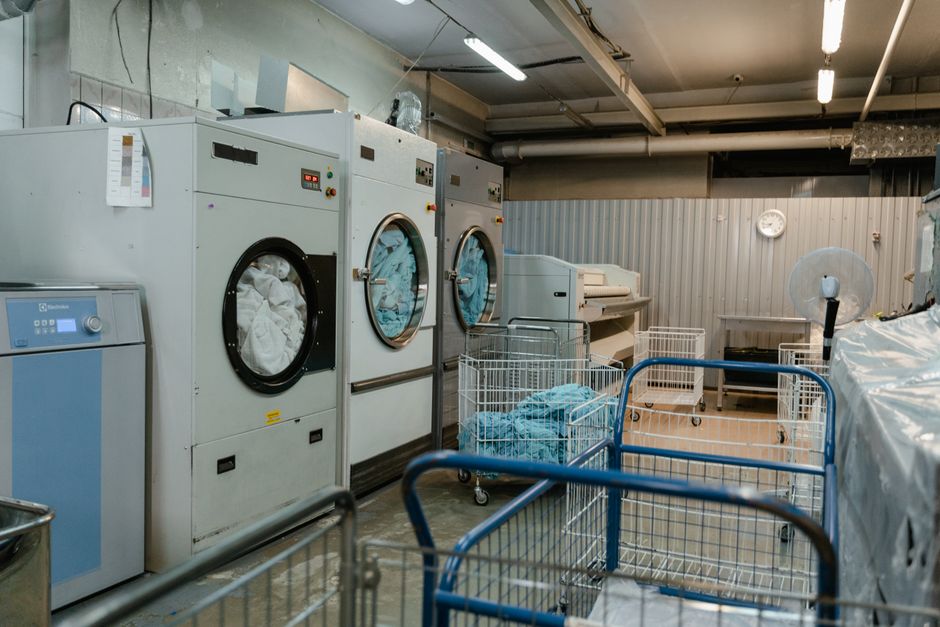
Choose the model with the lower fully loaded cost per pound only after testing whether it can meet your turnaround, space, and linen-risk requirements. In-house laundry gives you control but carries labor, utility, maintenance, equipment, and capacity costs. Outsourcing converts much of that work into a service invoice, but freight, contract minimums, price escalators, higher par levels, disruptions, and linen loss can erase the apparent savings.
Do not compare a wage rate with a vendor quote. That is a false matchup. Compare two operating systems that must both deliver clean, available linen when rooms need it.
Is it cheaper for a hotel to outsource laundry or do it in-house?
Neither model is automatically cheaper; the cheaper choice is the one with the lower annual fully loaded cost after you price capacity, turnaround, and inventory exposure. Start with the annual cost, then divide by the pounds actually processed. A cheap-looking system that cannot supply rooms on a peak day is not cheap. It is a service failure waiting for a calendar date.
For an on-premises laundry, labor must be loaded correctly. The U.S. Bureau of Labor Statistics reported total employer compensation of $19.90 per hour in private leisure and hospitality in December 2024, including $3.65 in benefits. For service occupations in the sector, total employer compensation averaged $18.00 per hour: $14.93 in wages and $3.07 in benefits. Use the applicable loaded rate in your model, not wages alone.
Then add equipment ownership, maintenance, repairs, utilities, water, hot-water energy, chemicals, and the space committed to laundry operations. ENERGY STAR says certified commercial clothes washers are on average 9% more energy efficient and use about 45% less water than standard models. That does not make the equipment free. It tells you why machine choice, load size, and utility use belong in the calculation.
For outsourced service, begin with the quoted processing or rental charge, then add every required line item: pickup and delivery, fuel or freight components, minimum charges, surcharges, annual escalators, special-item handling, and loss or replacement exposure. Ask a clean question: “What is our total annual bill if volume is lower than forecast, and what changes if a delivery is late?” Get the answer in writing.
| Cost bucket | In-house model | Outsourced model |
|---|---|---|
| Labor | Loaded payroll for washing, drying, finishing, handling, and supervision | Included in supplier pricing, but verify added handling charges |
| Utilities and chemicals | Water, hot-water energy, electricity or gas, and wash chemistry | Usually embedded in the service rate |
| Equipment and space | Capital, maintenance, repairs, downtime, and laundry footprint | Supplier capacity replaces most equipment ownership, but delivery dependence rises |
| Linen inventory | Par level must cover internal production and breakdown risk | Par level must cover the service turnaround and disruption risk |
| Loss exposure | Hotel manages counts and replacement | Depends on whether linen is rental stock or customer-owned goods |
Use a decision matrix after the math. A small or seasonal hotel may value variable outsourced capacity over owning underused equipment. A space-constrained hotel may have no practical room for a full operation. A high-volume property may find that dedicated workflow changes the economics, but volume alone is not a verdict. American Laundry News described a healthcare on-premises operation processing 2.6 million pounds annually with dedicated large equipment; that illustrates how capacity and workflow become material at scale, not a threshold every hotel should copy.
For any procurement comparison, make risk visible rather than burying it in a single rate. That is the same useful habit behind this guide to reducing risk when buying a pre-owned luxury watch: compare the total exposure, not just the initial price.
How do I calculate my hotel's laundry cost per pound?
Calculate annual fully loaded laundry cost, then divide it by the annual pounds you actually process or buy from the supplier. Keep the numerator honest and the denominator operational. Do not divide by theoretical machine capacity or expected occupancy; use a documented volume period and state what it includes.
For in-house laundry, use this working formula:
(Loaded labor + utilities + chemicals + maintenance and repairs + equipment cost + laundry-space cost + linen replacement and loss) / pounds processed = fully loaded in-house cost per pound.
For outsourced laundry, use this parallel formula:
(Processing or rental charges + delivery/freight + minimums + escalators + special handling + extra inventory carrying cost + loss and replacement exposure) / pounds processed = fully loaded outsourced cost per pound.
The phrase “equipment cost” needs discipline. Include the annual cost of owning the equipment over its useful operating period according to your accounting method, plus maintenance and repairs. The phrase “space cost” needs the same discipline: use the cost your hotel actually assigns to that space, not an invented market rent.
Build two columns in the same worksheet. Weak version: “Vendor rate versus hourly pay.” Strong version: “Annual all-in cost, usable pounds, service level, and inventory cash tied up.” The strong version reduces cognitive load for the person approving the decision because every material trade-off sits in one place.
Run a sensitivity check before you sign or buy. Change the volume assumption, delivery reliability assumption, and linen-loss assumption one at a time. If the winner changes quickly, the decision is sensitive and deserves tighter contract terms or a larger operational buffer. Public data in the supplied sources does not provide hotel-specific utility prices, vendor rates, replacement prices, or a universal cost of space, so those inputs must come from your bills, quotes, and records.
How much extra linen inventory does outsourced hotel laundry require?
Outsourced laundry requires enough additional linen to cover the supplier's actual turnaround and disruption exposure; there is no single universal par level in the supplied sources. Model the entire period from collection through return, then add the buffer your operation needs for a late or incomplete delivery. The buffer is not a vague safety margin. It is inventory cash, storage, count work, and replacement risk.
American Laundry News reported that a 360-room Embassy Suites in Indianapolis ran a three-par linen inventory while operating laundry in-house. Its chief engineer also described washing sheets used that day for the same day's check-in, a clear warning that a nominal par level and real production capacity are different things. If your laundry flow requires that kind of compressed recovery, your system has little room for a breakdown, peak demand, or delayed delivery.
Use a plain operating script with your team and supplier: “Our par requirement covers normal turnaround plus a documented disruption buffer. We will reconcile sent, returned, rejected, and missing pieces on a recurring schedule.” That sentence creates an operating control, not just a purchasing preference.
Separate two models. With supplier-owned rental linen, the supplier may absorb more stock responsibility, but you still need to confirm availability, quality, and shortage procedures. With customer-owned goods, the hotel retains replacement exposure and needs stronger count controls. TRSA notes that frequent customer-owned-goods production changeovers can create lost productivity and extra labor for commercial laundries. Its reporting on the UK market also cites linen-loss rates as high as 60% annually, a risk signal that should make hotels measure their own loss rather than assume it is immaterial.
The Textile Rental Services Association lodging linen-loss guide recommends improved inventory reporting and benchmarking, and says properties can compare practices by segment, size, and location against national norms. Put that advice into a simple monthly review: count opening stock, pieces sent, pieces returned, pieces rejected, pieces missing, replacements bought, and closing stock. Investigate the variance by item. “Linen loss” is not an explanation; it is a category that needs a count.
Decision drill for this week: ask finance, housekeeping, engineering, and any laundry supplier to complete the same one-page model. Require each person to identify one cost currently excluded, one turnaround assumption, and one inventory risk. The option with the clearest answers is the option you can manage.
Frequently Asked Questions
What costs are hidden in a hotel laundry service contract?
Review freight or delivery charges, volume minimums, annual price escalators, service changes, shortage handling, and responsibility for lost or damaged customer-owned linen. Ask for the billing unit and the process for resolving count discrepancies before comparing the quoted rate with in-house costs. The quoted processing rate is only one line in the operating model.
At what hotel size does on-premises laundry make financial sense?
Public sources provided here do not establish a universal room-count threshold. The decision turns on annual pounds, the labor and utility burden, available space, equipment capacity, required turnaround, and the cost of maintaining adequate linen inventory. High volume can make dedicated equipment and workflow material, but each property needs its own fully loaded comparison.
How can a hotel reduce linen loss when using an outside laundry service?
Use recurring inventory reporting, benchmark loss patterns, and review discrepancies by item rather than treating linen loss as a vague monthly problem. TRSA's lodging guide identifies inventory reporting and benchmarking as controls for quality improvement and cost control. Define who owns the stock, how counts are confirmed, and what happens when a shortage or loss appears.
Sources
- U.S. Bureau of Labor Statistics: Compensation Costs in Leisure and Hospitality
- ENERGY STAR: Commercial Clothes Washers
- Textile Rental Services Association: Lodging Linen Loss Reduction Guide and Benchmarking Study
- Textile Rental Services Association: Rental Textiles and Hotels
- American Laundry News: Hotel and Healthcare On-Premises Laundry Operations