
How Do You Choose Corporate Party Entertainment?
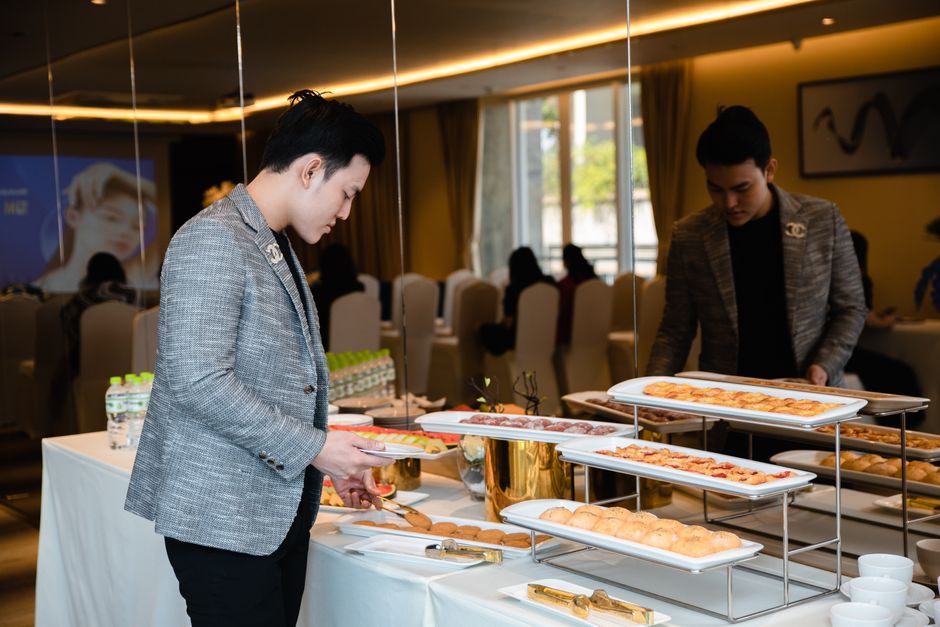
Choose corporate party entertainment by matching the format to the event’s purpose, guest count, venue, and company culture. Use low-pressure ambient acts for receptions, a focused performance for seated dinners, and a DJ or band when dancing is part of the plan. Compare production needs and quotes, make participation optional and accessible, then build the entertainment, meal, speeches, and transitions into a timed run of show.
What are some ideas for entertainment at a corporate party?
Good corporate party entertainment fits how guests will use the room: mingling, sitting down together, dancing, or moving through an open house. The seven formats below are starting points, not a ranking; each has a different balance of attention, participation, and production.
- Live background musician: A solo musician or small ensemble can provide atmosphere at a cocktail reception without requiring guests to stop conversations.
- Strolling performer: A roaming act can move among reception groups, provided the venue allows clear travel routes and the performance does not interrupt conversation.
- Interactive art or making station: Guests can participate at their own pace; position it away from entrances and busy service paths.
- Shared feature performance: A short, focused act can anchor a seated dinner or reception program when the audience can see and hear it.
- DJ-led music: A DJ can support a flexible event that moves from dinner to dancing, with volume and transitions coordinated with the venue.
- Live band: A band can make sense when dancing is central, but its footprint, staging, sound, and setup requirements need early venue review.
- Open-house activity stations: Several optional stations let guests circulate and choose their level of involvement, making this format useful when arrivals and departures are staggered.
Use the format as a filter before requesting quotes. A seated performance needs sightlines and a shared listening window; a roaming act needs circulation space; music for dancing needs a plan for sound, staging, and the handoff from dinner.
| Format | Participation | Space and production | Budget reference | Guest-count fit |
|---|---|---|---|---|
| Background musician | Low; guests can listen or talk | Small performance area; confirm sound needs | No universal booking range in the sources; request a quote | Potentially adaptable; confirm room coverage and volume |
| Strolling act | Optional, in small groups | Clear paths and accessible circulation | Request itemized act and travel costs | Depends on circulation space and performance pace |
| Interactive station | Guest chooses whether to join | Dedicated area, materials, and accessible approach | Request an activity and setup quote | Check capacity and expected queueing |
| Feature performance | Shared audience attention | Visible performance area, sound, and possibly staging | Request performer and A/V costs separately | Confirm sightlines and sound coverage for the room |
| DJ or band | Optional dancing | Sound, power, setup space, and venue approval | Request a quote; clarify travel and production | Depends on dance-floor space and sound plan |
There is no defensible fixed price range for a corporate event in the provided sources. The U.S. Bureau of Labor Statistics reports a median hourly wage of $42.45 for musicians and singers in May 2024, with the lowest 10% earning under $18.68 and the highest 10% over $105.44. Those figures describe occupational wages, not the price of booking an act. Encore Musicians’ UK guide, based on more than 100,000 customer quotes, gives an average of £221 for a solo violinist and £288 for a DJ, with travel additional; those are UK quote references, not universal event rates.
Plan for production separately from the act fee. In Global DMC Partners’ 2023-to-2024 survey, more than 70% of respondents said higher-than-expected A/V costs were a challenge most or all of the time when working with hotels and venues. Ask vendors and venues to identify sound, staging, power, travel, setup, and any required technical labor before comparing proposals. Encore reports that planners find ROI data useful when making the case for AV and production spending, while entertainment remains among the event investments planners find difficult to justify to stakeholders.
What are some fun activities for a corporate event?
Fun corporate activities give guests a clear way to join without making participation compulsory. Consider interactive stations, small-group creative activities, or optional audience participation around a performance; the right choice depends on whether the event is designed for conversation, shared attention, or movement.
Make access part of the design, not a venue-day repair. The New York City Mayor’s Office for People with Disabilities recommends accessible activity spaces, including performance areas and speaker stages, accessible seating layouts, wide aisles for wheelchair travel, portable microphones for audience participation, assistive listening through the public-address system, and quiet areas. The guide reports that nearly one million city residents—about 11% of New York City’s population—have a disability; the broader planning point is that access needs belong in the initial layout.
Offer more than one participation level. Guests can watch rather than perform, take part briefly rather than for the full activity, or step into a quieter area. Check that activity stations, seating, and routes work for different mobility needs and comfort levels, and ask the venue or provider about age suitability and sensory conditions. For food-focused events, coordinate activity placement with service and dietary logistics; this guide on choosing, sizing, and serving finger foods for a party can help with that adjacent planning task.
What are some ideas for entertainment for a corporate dinner?
For a corporate dinner, choose entertainment that supports conversation during the meal and offers a distinct moment when guests are ready to focus. Background music can accompany arrival or dining; a feature performance is better placed in a planned program window rather than competing with service, speeches, or table conversation.
Build a sample sequence around the actual meal and venue timing: guests arrive to ambient music; the host welcomes attendees; dinner service begins; a feature performance takes place after a course or at another agreed pause; speeches follow in a clearly defined block; and dancing begins only if it suits the format. The sequence can change, but the transitions should be explicit so guests and staff know what happens next.
Georgetown University Event Management Services defines a run of show as a timed document listing major event elements with details for staff and volunteers. Its planner checklist includes meal and presentation timing, transitions, setup and breakdown, vendor space access, transition time, and an A/V microphone check with staff and speakers. Use that document to confirm who cues the act, when microphones are handed over, and where the performance equipment can be accessed without disrupting service.
What are some fun games to play at a corporate event?
Useful corporate event games are simple to explain, optional to join, and short enough to fit the event’s schedule. A table-based trivia round, a low-pressure team puzzle, or an activity-station challenge can work when the room has space and the host can explain the rules clearly; these are format suggestions, not claims about measured outcomes.
Choose the game by the social conditions it creates. A group competition asks for public participation and a shared time commitment; a station-based puzzle lets guests come and go; a table activity keeps movement low but can interrupt dinner. Avoid making a guest’s participation, mobility, age, or comfort level the price of entry. Provide a way to observe, pass, or participate with a small group.
Keep the mechanics visible: state the duration, how to join, whether teams are assigned, and how the activity ends. If the game uses a microphone or projected content, include those requirements in the venue and A/V check. A game that fits the room and schedule is more useful than one that adds an unplanned interruption.
Frequently Asked Questions
How do I choose entertainment for a corporate party based on guest count and event format?
Start with whether guests will be mingling, seated, or moving between activities, then choose an act that fits the room and attention pattern. Confirm capacity, sightlines, sound, staging, and accessibility with the venue; guest count alone does not determine suitability.
How much should a company budget for corporate party entertainment?
There is no source-backed universal event booking range: performer quotes depend on the act and production requirements. The BLS median hourly wage for musicians and singers was $42.45 in May 2024, but this is occupational wage data, not an event booking rate. Request itemized quotes and account separately for A/V, travel, and venue-related costs.
How do you schedule entertainment around dinner, speeches, and dancing?
Put meals, performances, speeches, transitions, setup, and breakdown into a timed run of show, and include transition time and an A/V microphone check. Ambient entertainment can cover arrival and mingling; place a shared feature performance where it does not compete with dinner or essential remarks, then open the dance floor if it fits the event.
Sources
- Encore, 2024 Outlook Research
- Global DMC Partners, Q3 2024 Survey Report
- New York City Mayor’s Office for People with Disabilities, Planning an Accessible Event
- Georgetown University Event Management Services, Planner Checklist
- U.S. Bureau of Labor Statistics, Musicians and Singers
- Encore Musicians, How Much Does It Cost to Hire Musicians?
Keep reading
How Should I Choose, Size, and Serve Finger Foods for a Party?
A practical guide to calculating party finger food quantities, building balanced menus, and serving safely for standing guests.

Choose the Right Warehouse Floor Machine Without Guesswork
Choose a warehouse sweeper or scrubber by floor soil, traffic, drainage, and cleaning window, not square footage alone.
How Do I Choose a Nearby Sit-Down Restaurant for My Occasion?
A practical framework for choosing a nearby sit-down restaurant using menus, maps, reservations, and recent reviews.
Should a Hotel Outsource Laundry or Run It In-House?
Compare in-house and outsourced hotel laundry using fully loaded costs, turnaround capacity, par levels, and linen-loss risk.