
How Do I Choose a Nearby Sit-Down Restaurant for My Occasion?
Choose a nearby sit-down restaurant by testing four pieces of evidence together: whether the menu fits the party and occasion, whether recent reviews repeat the same specific strengths or problems, whether the map listing and reservation tool support your timing, and whether the restaurant can handle dietary, accessibility, and payment needs. A star average alone is not a decision system.
The puzzle is that restaurant search tools present a single number as if it settles the matter. They cannot. A dinner before an event, a quiet conversation, a family meal, and a six-person celebration impose different constraints; the useful choice is the restaurant whose evidence matches those constraints, not the one with the most visually impressive average.
How can I tell whether a nearby restaurant is actually good?
You can tell by converting “good” into occasion-specific evidence, then checking the menu, map listing, recent reviews, and booking path in that order. Maps answer the logistical question: is the location, listed schedule, and route compatible with the plan? The menu answers the more consequential question: can this kitchen plausibly serve this party?
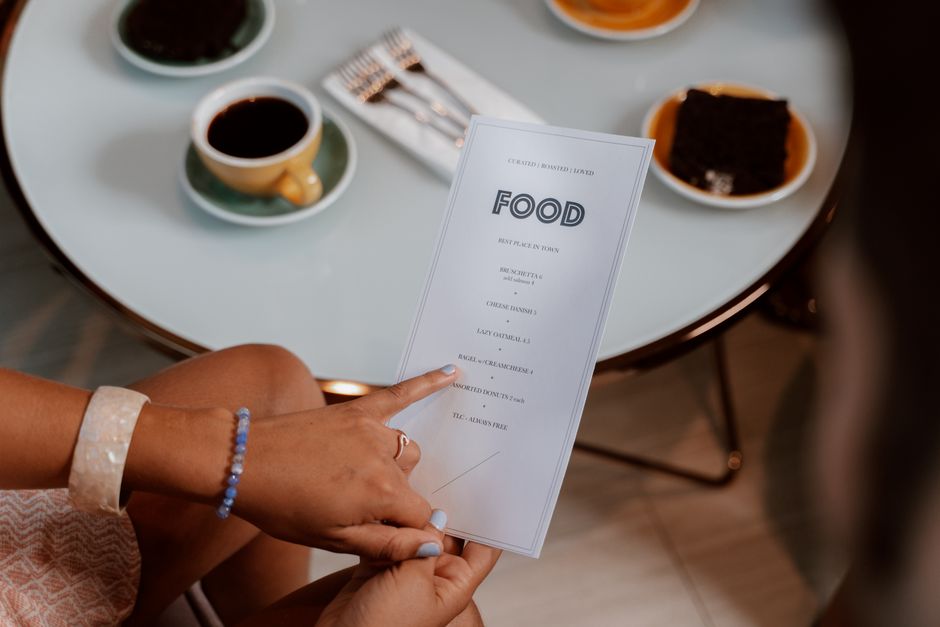
Read the menu before opening the reservation calendar. Look for dishes that suit the meal's purpose, enough choices for the group, and descriptions that let diners identify likely restrictions. A menu is not merely a catalog; it is the restaurant's public statement of what it intends to serve. For planning a meal around dietary preferences, the practical logic is similar to choosing healthy meals that actually taste good: constraints only work when they lead to food people will genuinely want to order.
Then read recent reviews as a pattern-recognition exercise. The 2022 PLoS One study found that, when negative service issues appeared with high rather than low frequency in reviews, readers attributed the problem more strongly to the restaurant and evaluated it less favorably. That distinction matters. One complaint about noise is an observation; repeated recent comments about noise, crowding, cleanliness, or service are evidence about the experience you are likely to receive.
Record only issues relevant to the occasion. A lively, crowded room may be acceptable for a casual group dinner and wrong for a conversation that requires hearing every person at the table. The decision is not “busy equals bad.” It is “does the observed atmosphere fit the purpose?”
| Tool | Question it should answer | Decision consequence |
|---|---|---|
| Map listing | Can the party get there and arrive at a workable time? | Remove options that fail the logistical constraint. |
| Menu | Can each diner identify a suitable meal and service style? | Remove options that do not fit the party. |
| Recent reviews | Which specific experience is repeatedly described? | Match recurring strengths and weaknesses to the occasion. |
| Reservation tool | Can the restaurant support the required time and party arrangement? | Book only after the practical fit is established. |
Should I trust a restaurant's star rating if it has few reviews?
No: use a rating with few reviews as a lead, not as a conclusion. Research published in Frontiers in Psychology found that online-review ratings had a statistically significant positive relationship with restaurant purchase intention, with a standardized effect of 0.389; perceived crowding also had a significant effect, at 0.283. Ratings influence decisions. They do not describe the entire meal.
The study also found that crowding moderated the effect of ratings. In plain terms, diners interpret a busy restaurant alongside the rating rather than reading either signal in isolation. That is a useful warning against both extremes: neither dismiss a rating because it is imperfect nor treat it as proof that the restaurant fits your evening.
Few reviews create a narrower evidence base. The correct response is not to invent certainty from the average. Read the available reviews for concrete, repeated details; compare their dates and relevance to the meal you are planning; then give more weight to evidence you can independently inspect, such as the menu and the restaurant's own booking information. If the evidence remains thin, choose only if the consequences of a mismatch are low. A time-sensitive celebration deserves a better-supported choice.
How do I avoid a long wait at a sit-down restaurant?
Avoid a long wait by checking the restaurant's listed hours and reservation availability before leaving, reserving when timing matters, and confirming how the restaurant handles your party rather than assuming a walk-in will work. The reservation is not a ceremonial click. It is a coordination mechanism between the restaurant's seating plan and your actual requirements.
Use the restaurant's own site or approved reservation provider. The National Restaurant Association's 2024 reservation polling, based on a Morning Consult poll of 2,200 U.S. adults, reported that two-thirds agreed unauthorized third-party reservation resellers harm restaurants and customers. The same polling found 74% were concerned that a restaurant could not communicate directly with a customer who bought a reservation through a resale site. Direct booking preserves the channel needed to clarify a late arrival, special requirement, or change in party size.
For a group, make the questions explicit before confirming: Can the restaurant seat the full party together? Does the arrangement suit the occasion? Can the payment process work for the group? OpenTable's 2025 diner-trends research notes an increase in reservations for parties of six or more and identifies flexible table setups, coordinated ordering, and split checks as relevant group-dining considerations. These are not details to negotiate at the table after everyone has arrived.
Time at a restaurant also includes ordering and paying. National Restaurant Association 2024 research of more than 1,000 consumers found that full-service Gen Z adults, millennials, and Gen Xers rated several technology options for ordering or paying by tablet, app, contactless payment, or digital wallet at 60% to 80% or higher. If the meal has a firm end time, it is reasonable to check whether restaurant-provided ordering or payment tools are available; the Association says these options can reduce waits to order and receive the check.
A decision rule that survives real constraints
Use elimination before comparison. First remove restaurants that fail a non-negotiable requirement: the menu cannot support the party, the listed timing does not work, the reservation process cannot accommodate the group, or the restaurant cannot clarify a dietary question. Only then compare the survivors by recent review patterns and atmosphere.
Dietary language deserves special care. The U.S. Food and Drug Administration says that its federal gluten-free labeling rule applies to packaged foods, including foods sold in some food-service establishments, and advises diners to ask a restaurant what it means by “gluten-free,” what ingredients are used, and how the item is prepared. A restaurant menu claim is therefore a prompt for a precise question, not a substitute for one.
The final choice should be explainable in one sentence: this restaurant fits the menu, timing, party, and atmosphere better than the alternatives, and the recent evidence does not reveal a recurring problem that conflicts with the occasion. That is not glamorous. It is reliable.
Frequently Asked Questions
What should I check on a menu before booking a restaurant?
Check whether the menu has enough plausible choices for the occasion and every person in the party, then inspect descriptions for ingredients and service style. For a gluten-free item, the FDA advises asking what the restaurant means by the term, which ingredients are used, and how the item is prepared. If the menu does not answer the question, contact the restaurant before booking.
How do I choose a restaurant that works for a group with different diets?
Start with the menu, but do not treat labels as complete operational information. Tell the restaurant about the party's dietary needs and ask how each relevant item is prepared. Also confirm the party size, seating arrangement, and bill-splitting process before committing, particularly for a larger group.
When should I make a restaurant reservation instead of walking in?
Make a reservation when the occasion depends on a particular arrival time, table arrangement, or group size, or when a long wait would undermine the plan. Book through the restaurant or its approved provider rather than a resale marketplace. The National Restaurant Association's 2024 polling found that 80% of consumers consider protection from resale-company reservations important.
Sources
- PLoS One / PubMed Central: Frequency of negative service issues in restaurant reviews
- Frontiers in Psychology / PubMed Central: Review ratings, crowding, and purchase intention
- National Restaurant Association: Restaurant Reservation Polling Memo
- OpenTable: 2025 Diner Trends
- National Restaurant Association: Automated Meal Ordering and Payment
- U.S. Food and Drug Administration: Gluten-Free Means What It Says
Keep reading
What Fast, Make-Ahead Appetizers Stay Appealing Without Using the Oven?
Plan fast make-ahead appetizers that stay fresh, protect oven space, and provide enough food without spoiling dinner.
What Should I Eat for Breakfast, Lunch, and Dinner to Be Healthy?
Build flexible, balanced meals with rotating ingredients, practical templates, and a plan that avoids calorie-by-calorie tracking.
How Should I Choose, Size, and Serve Finger Foods for a Party?
A practical guide to calculating party finger food quantities, building balanced menus, and serving safely for standing guests.

How Can I Make Healthy Meals That Actually Taste Good?
A practical, evidence-based guide to making healthy meals flavorful, satisfying, and worth cooking again.