
How to Compare Bottled Water Labels Without Trusting Taste Rankings
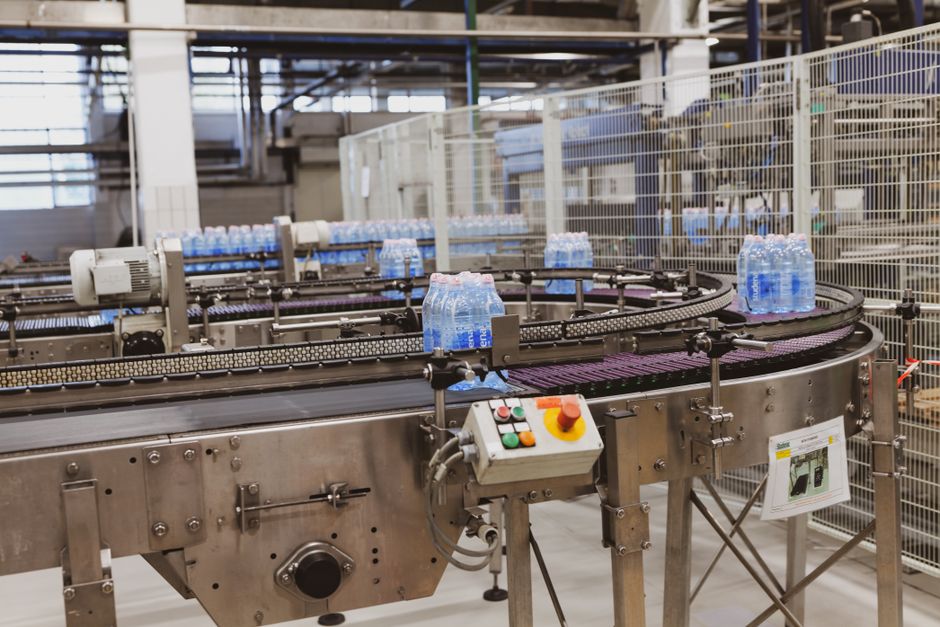
Compare bottled water by the label's source category, treatment method, mineral values in mg/L, packaging, and intended use. Spring and mineral labels describe origin, while purified labels describe treatment; neither guarantees a superior choice. For routine drinking, select the profile that fits your needs, then treat taste as a personal preference rather than evidence of quality.
The puzzle is that a bottle can carry an evocative source name and still disclose less useful information than a small mineral panel. The practical comparison is not spring versus purified as a prestige contest. It is a sequence: identify what the term legally describes, inspect the listed minerals, decide what you need the water for, and then account for the package.
Is spring water better than purified bottled water?
No: spring water and purified water identify different properties, so neither label is inherently better. According to the U.S. Food and Drug Administration, spring water comes from an underground formation that flows naturally to the surface; if collected through a borehole, it must have the same composition and quality as the naturally flowing water.
Purified water, by contrast, is treatment-defined. FDA states that water treated by distillation, reverse osmosis, or another suitable process may be labeled purified, and that distillation and reverse osmosis remove minerals. That makes the label useful when a buyer wants to know whether mineral removal occurred, not when trying to infer flavor or superiority.
Mineral water has a separate threshold: FDA defines it as water from an underground source with at least 250 parts per million total dissolved solids. Its minerals and trace elements must come from the source and cannot be added later. This is meaningful provenance information, but it is still not a complete purchasing decision. A mineral-water label establishes a category; its numerical panel establishes the profile.
For a café, restaurant, or food business buying water for service, the disciplined question is therefore narrower: does the disclosed composition suit the intended service? Public data supplied here do not publish a universal best source category, a universal price comparison, or a universal taste winner. Those omissions are useful. They prevent a label term from doing analytical work it cannot do.
Why do different bottled water brands taste different?
Different brands taste different largely because their dissolved-mineral profiles differ, and taste preference is not a universal quality measurement. In a sensory study indexed by PubMed, trained panelists blind-tasted commercial bottled mineral waters as well as tap and bottled samples. Preferred samples were associated with moderate total dissolved solids and relatively higher bicarbonate, sulfate, calcium, magnesium, and pH; higher sodium, potassium, and chloride received lower scores from many panelists.
The conclusion is precise: taste data can describe the preferences of a panel, but cannot certify that one bottle is objectively better for every buyer. A ranking strips away the label information that explains why one sample may appeal to one group and not another.
An international analysis published in Nutrients makes the problem clearer. Researchers recorded calcium, bicarbonate, magnesium, sodium, and sulfate values from bottled-water labels in leading supermarkets across 21 countries. Among still waters, median bicarbonate varied by a factor of 12.6 and median calcium by a factor of 18.7; among sparkling waters, the variation factors were 57.3 and 7.4.
That variation is why “natural,” “spring,” and “mineral” are inadequate shortcuts. Compare values in mg/L where they are published. For coffee brewing, the supplied research does not publish a recommended bottled-water mineral specification, so a responsible comparison is limited to the disclosed composition rather than a claim that any category is best for coffee.
What minerals should I look for on a bottled-water label?
Look first for calcium, magnesium, bicarbonate, sodium, and sulfate in mg/L, then decide whether those published values fit your intended use. These are the values examined in the international bottled-water analysis, and they reveal more than a broad source label. If the label does not disclose a value, classify it as not published rather than assuming that it is low or absent.
Bicarbonate deserves particular attention because the numbers can be substantial. In a four-week randomized trial of 129 healthy adults, reported in Nutrients, participants consumed 1,500 to 2,000 mL daily of one of four mineral waters. The tested bicarbonate concentrations ranged from 403 mg/L to 2,451 mg/L. Waters with 1,816 to 2,451 mg/L bicarbonate reduced net acid excretion by 48%, 53%, and 68% in their respective intervention groups; the authors concluded that water above 1,800 mg/L bicarbonate with medium or low potential renal acid load reduced dietary net acid load in the healthy adults studied.
That finding is specific, not a license to turn any mineral claim into a health promise. The international analysis also notes that mineral content can influence stone formation, bone health, and cardiovascular risk, and calls for individualized advice for people with relevant medical conditions. A label is evidence; it is not individualized medical guidance.
Sodium and potassium require the same numerical discipline. The National Institutes of Health Office of Dietary Supplements lists recommended adult potassium intakes of 3,400 mg for men and 2,600 mg for women, while also identifying many food sources of potassium. A small electrolyte claim on a bottle should therefore be read beside the actual milligrams. NIH also advises people with kidney disease or people taking certain medicines to consult a clinician before using potassium-containing salt substitutes because potassium can become too high.
| Option | Who it suits | Cost | Key limitation |
|---|---|---|---|
| Spring water | Buyers who want water defined by an underground formation that naturally flows to the surface | not published | Source category does not disclose its full mineral profile |
| Mineral water | Buyers comparing naturally occurring source minerals and total dissolved solids | not published | At least 250 ppm total dissolved solids does not identify the specific calcium, magnesium, sodium, or bicarbonate values |
| Purified water | Buyers seeking water labeled after distillation, reverse osmosis, or another suitable purification process | not published | Distillation and reverse osmosis remove minerals |
| Electrolyte-added bottled water | People doing endurance activity over one hour or exercising in extreme environments, when electrolyte replacement may be needed | not published | The actual electrolyte milligrams must be compared; routine necessity is not established by the supplied sources |
| Single-use PET or HDPE bottle | Buyers choosing between disclosed water profiles in common plastic water packaging | not published | EPA reported 2018 recycling rates of 29.1% for PET bottles and jars and 29.3% for HDPE natural bottles; local acceptance still matters |
| Aluminum, glass, or reusable bottle | not published | not published | Packaging trade-off data are not published in the supplied sources |
Packaging should be treated as a separate decision from water composition. The U.S. Environmental Protection Agency identifies PET beverage bottles and HDPE water bottles as plastic container-and-packaging products. In the United States in 2018, EPA reported recycling rates of 29.1% for PET bottles and jars and 29.3% for HDPE natural bottles. “Recyclable” is not the same claim as “recycled”; check local acceptance rather than assuming the label settles the outcome.
The resulting buying rule is simple: read source, treatment, mineral panel, package, and intended use in that order. This is the same discipline behind reading a packaged food label in the U.S.: categories establish a baseline, but the specific disclosure carries the decision.
Frequently Asked Questions
Is bottled water with electrolytes worth buying?
It can be relevant for endurance activity lasting more than one hour or exercise in extreme environments, where NIH says people might need to replace fluids and electrolytes. For ordinary hydration, the evidence provided does not establish that an electrolyte-added bottle is necessary. Compare the actual mineral milligrams on the label instead of relying on the word “electrolytes.”
Does bottled water source matter?
Yes, but it answers a narrow question. Spring water must come from an underground formation that naturally flows to the surface, while mineral water must come from an underground source and contain at least 250 ppm total dissolved solids. Source alone does not tell you the calcium, bicarbonate, magnesium, sodium, or sulfate values, which can vary widely.
How can I compare bottled-water brands without trusting a ranking?
Start with source and treatment, then compare the mineral panel in mg/L, the package, and your intended use. Do not treat a taste ranking as a quality score: a sensory study found associations between preferences and mineral patterns, but preference was not universal. If a needed value or packaging detail is absent, record it as not published rather than inferring it.
Sources
- U.S. Food and Drug Administration: Bottled Water Everywhere: Keeping It Safe
- Food Quality and Preference: Sensory study of bottled and tap water
- Nutrients: International bottled-water label analysis
- Nutrients: Randomized trial of bicarbonate-rich mineral water
- National Institutes of Health Office of Dietary Supplements: Potassium
- U.S. Environmental Protection Agency: Plastics Material-Specific Data
Keep reading

What Fast, Make-Ahead Appetizers Stay Appealing Without Using the Oven?
Plan fast make-ahead appetizers that stay fresh, protect oven space, and provide enough food without spoiling dinner.

How Do I Choose a Nearby Sit-Down Restaurant for My Occasion?
A practical framework for choosing a nearby sit-down restaurant using menus, maps, reservations, and recent reviews.

What Should I Eat for Breakfast, Lunch, and Dinner to Be Healthy?
Build flexible, balanced meals with rotating ingredients, practical templates, and a plan that avoids calorie-by-calorie tracking.

How Should I Choose, Size, and Serve Finger Foods for a Party?
A practical guide to calculating party finger food quantities, building balanced menus, and serving safely for standing guests.